Deep within the lesser-traveled corners of Eastern Europe, where the whispers of ancient folklore still echo through misty valleys and dense forests, lies a world largely uncharted by modern travelers. The very phrase "Eastern European Secret Realm" evokes a sense of mystery, a promise of discovery beyond the well-trodden paths of Prague or Budapest. It is a realm where time seems to fold upon itself, where medieval villages cling to hillsides, and where nature asserts its dominance in sprawling, untamed landscapes. This is not merely a geographic region but a living tapestry of cultures, histories, and secrets waiting to be unraveled by those willing to venture beyond the familiar.
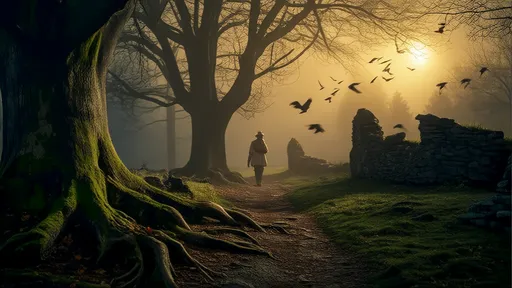
One such enigmatic destination is the Białowieża Forest, straddling the border between Poland and Belarus. This primordial woodland, a relic of the ancient forests that once covered much of Europe, feels like a portal to another epoch. Here, towering oaks and pines stand as silent witnesses to centuries of history, while the air hums with the calls of rare birds and the occasional rustle of European bison—the continent's heaviest land animal—moving through the undergrowth. Local legends speak of spirits guarding the forest, and it is easy to believe in such tales when wandering its shadowy paths, where sunlight filters through the canopy in dappled patterns and the boundary between myth and reality blurs.
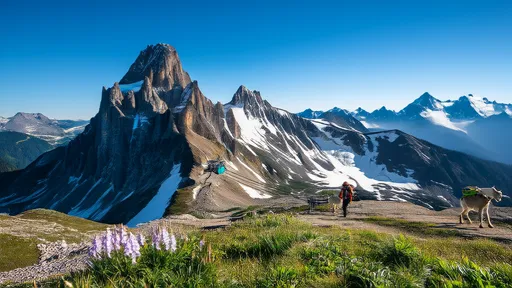
Further south, the Carpathian Mountains carve a dramatic arc across multiple countries, offering a rugged and often overlooked counterpart to the Alps. In Romania, the Carpathians shelter not only pristine wilderness but also communities where traditions have remained largely untouched by globalization. Villages like Maramureș are renowned for their wooden churches and intricately carved gates, each telling stories of faith, craftsmanship, and resilience. The region is also home to the Merry Cemetery in Săpânța, where colorful tombstones depict the lives and often humorous epitaphs of the deceased, reflecting a unique perspective on mortality that is both poignant and celebratory.
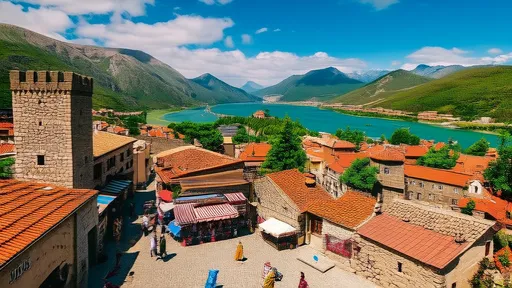
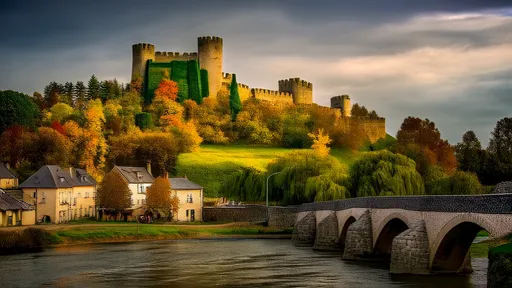
Venturing into the Balkans, the mystique deepens. In Bosnia and Herzegovina, the town of Mostar is famed for its iconic Stari Most bridge, but beyond this symbol of reconciliation lie cobblestone alleys and Ottoman-era architecture that whisper tales of empires and conflicts. Yet, it is in the countryside that the true未知 (unknown) reveals itself. The Una National Park, with its emerald rivers and cascading waterfalls, feels like a hidden paradise, while the surrounding hills are dotted with medieval fortresses whose ruins hint at long-forgotten battles and kingdoms.
Equally captivating is Transnistria, a self-declared republic nestled between Moldova and Ukraine that exists in a political limbo. Frozen in time, its Soviet-era aesthetics—from hammer and sickle insignias to statues of Lenin—create a surreal atmosphere that contrasts sharply with the surrounding modernity. Here, the past is not just remembered; it is palpably present, offering a glimpse into a world that elsewhere has vanished. The region's isolation has preserved a way of life that feels both anachronistic and fascinatingly authentic, making it a living museum of 20th-century history.
Another jewel of Eastern Europe's Secret Realm is Plovdiv in Bulgaria, one of the oldest continuously inhabited cities in the world. Beneath its vibrant streets lie layers of history: Roman amphitheaters, Thracian ruins, and Ottoman baths coexist with trendy galleries and cafes. The city's artistic spirit thrives in its Kapana creative district, where narrow lanes are filled with workshops and murals, embodying a blend of ancient heritage and contemporary innovation. Yet, beyond the urban charm, the Rhodope Mountains beckon with their wild beauty and legends of Orpheus, who is said to have been born in these mystical highlands.
The allure of these places is not solely in their physical beauty or historical significance but in the sense of discovery they inspire. Unlike Western Europe's meticulously curated tourist trails, Eastern Europe's hidden corners often feel raw and unpolished, offering authentic experiences that are increasingly rare in a globalized world. Travelers here are not mere spectators but participants in a narrative that is still being written, where every turn in the road can lead to a new revelation—a forgotten monastery, a traditional festival, or a heartfelt conversation with a local whose family has lived in the same village for generations.
Moreover, the region's culinary landscape is a testament to its diversity and resilience. From Poland's pierogi and Belarusian draniki to Romania's sarmale and Bosnia's ćevapi, the food tells stories of migration, adaptation, and survival. Each dish is a reflection of the land and its people, often prepared using age-old recipes passed down through generations. Sharing a meal in a rural homestead or a bustling market becomes not just a gastronomic experience but a cultural immersion, connecting visitors to the soul of these enigmatic lands.
Yet, with discovery comes responsibility. The very remoteness that preserves the charm of Eastern Europe's Secret Realm also makes it vulnerable. As tourism slowly increases, there is a delicate balance to be struck between sharing these treasures and protecting them from overcommercialization. Sustainable travel practices, respect for local customs, and support for community-based initiatives are essential to ensure that these regions retain their authenticity and magic for future explorers.
In the end, the未知 (unknown) of Eastern Europe is not just about places uncharted on maps but about the human stories, natural wonders, and cultural richness that lie waiting beneath the surface. It is an invitation to look beyond stereotypes and preconceptions, to embrace the unexpected, and to find connection in a world that often feels increasingly homogenized. For those who answer the call, the rewards are profound: a deeper understanding of history, a renewed sense of wonder, and the timeless thrill of discovery that has driven explorers for centuries.
By /Sep 1, 2025
By /Sep 1, 2025
By /Sep 1, 2025
By /Sep 1, 2025
By /Sep 1, 2025
By /Sep 1, 2025
By /Sep 1, 2025
By /Sep 1, 2025
By /Sep 1, 2025
By /Sep 1, 2025
By /Sep 1, 2025

By /Sep 1, 2025
By /Sep 1, 2025
By /Sep 1, 2025
By /Sep 1, 2025
By /Sep 1, 2025
By /Sep 1, 2025
By /Sep 1, 2025
By /Sep 1, 2025
By /Sep 1, 2025