Nestled in the very heart of Europe, Austria presents a symphony for the senses, a place where the very landscape seems to compose music. It is a country where soaring Alpine peaks, serene emerald lakes, and lush, whispering valleys are not merely a backdrop but the very soul of its profound cultural identity. This is the land of Sound of Music, not just as a film title, but as a lived experience, where the harmony between nature and human creativity has, for centuries, inspired some of the world's most sublime art and music. To speak of Austria is to speak of an enduring dialogue between the earth and the artistic spirit.
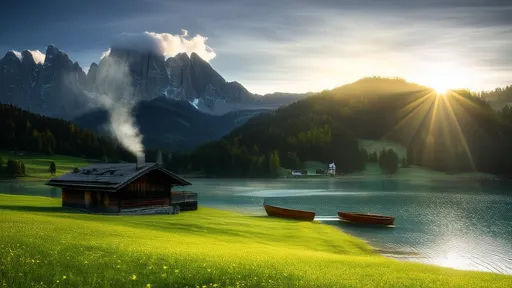
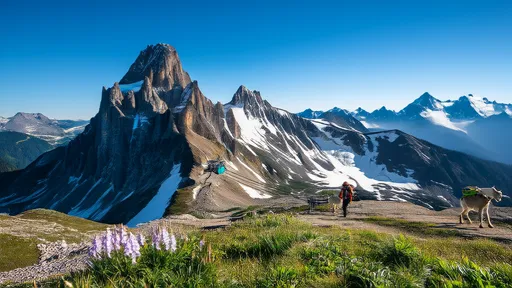
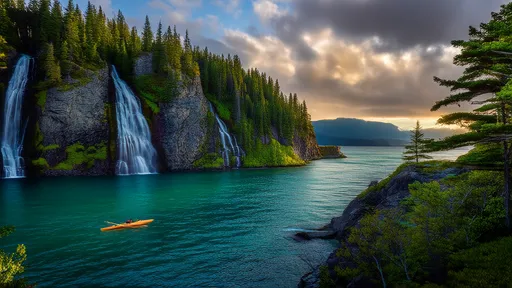
The Austrian topography reads like a dramatic musical score, with its own rhythms, crescendos, and gentle adagios. The mighty Alps dominate the western and southern provinces, their snow-capped peaks performing a silent, powerful overture against the sky. These mountains are not passive; they dictate the flow of life, the weather patterns, and have historically shaped the culture of isolation and resilience found in regions like Tyrol and Vorarlberg. Yet, this ruggedness is beautifully contrasted by the gentle, rolling hills of the Austrian countryside, the vast vineyards of Burgenland, and the peaceful, mirror-like surfaces of lakes such as Wolfgangsee and Hallstättersee. Each element contributes a unique note to the national melody.
It is from this powerful natural orchestra that Austria's most famous export—its classical music—seems to have directly sprung. One cannot wander through the streets of Salzburg, the birthplace of Mozart, without feeling the presence of the genius who walked them. The city itself, with its Baroque architecture set against the backdrop of the Mönchsberg mountain, feels like a permanent stage set. The connection is visceral; the clarity of the mountain air, the sound of the Salzach River rushing over stones, the echo of footsteps on cobblestones—it is easy to imagine how these natural acoustics and sights could ferment into the precise, joyful, and complex compositions of a prodigy.
Vienna, the imperial capital, further cements this relationship between landscape and art. For centuries, it was the musical epicenter of Europe, drawing composers like a magnet. Beethoven found solace and inspiration on long walks through the Wienerwald, the Vienna Woods. The dense forests and gentle meadows directly influenced his Pastoral Symphony, a work that is not merely about nature but is an auditory translation of the feeling of being within it—the peace of the countryside, the drama of a storm, the grateful calm that follows. Haydn and Schubert also drew deeply from the well of Austrian folk music, which is itself a product of the land, filled with yodeling echoes from mountain to mountain and the lively rhythms of village life.
This fusion of sight and sound extends beyond music into the very canvas of Austrian painting. The 19th-century Romantic movement found a particular home here. Artists sought to capture not just the physical appearance of the dramatic landscapes but their emotional and spiritual weight. They painted light breaking through clouds over a valley, the awesome power of a glacier, or the serene solitude of a mountain lake, often instilling these scenes with a sense of the sublime—a mixture of awe and terror at nature's grandeur. Their work was a visual equivalent of the symphonies being composed at the same time, both art forms attempting to articulate the ineffable beauty of the Austrian terrain.
Even into the 20th century, the pull of the Austrian landscape remained potent for artists, though their interpretations evolved. The works of Gustav Klimt, Egon Schiele, and Oskar Kokoschka, while often focused on the human form and psychology, still frequently used landscapes as powerful, expressive backdrops. Klimt's idyllic scenes of Attersee are shimmering mosaics of color and light, transforming the lake into a dreamlike, golden paradise. Here, the landscape becomes less a realistic depiction and more an emotional one, a pattern of feeling inspired by the water, trees, and light.
Today, this tradition of landscape music and painting—the seamless blend of mountain, water, sound, and picture—is not a relic of the past but a living, breathing aspect of Austrian culture. Modern composers still speak of the influence of the countryside on their work. Contemporary visual artists continue to explore the Austrian landscape through new mediums and perspectives. Furthermore, the country actively cultivates this identity. Outdoor concerts are held in breathtaking locations, from the middle of a lake to the summit of a mountain, allowing the environment to become part of the performance. Art installations are placed along hiking trails, deliberately framing a view or encouraging a moment of auditory reflection amidst nature.
In essence, Austria offers a unique proposition to the world. It is a nation where the environment is recognized not just as scenery but as a primary muse. The mountains do not just exist; they resonate. The lakes do not merely lie still; they reflect a deeper harmony. The forests are not simply quiet; they hold a profound silence that invites composition and creation. To experience Austria is to understand that its greatest art and music were never created in isolation within sterile studios. They were, and continue to be, collaborations with the wind, the water, the stone, and the sky—a timeless symphony of landscape music and painting.
By /Sep 1, 2025
By /Sep 1, 2025
By /Sep 1, 2025
By /Sep 1, 2025
By /Sep 1, 2025
By /Sep 1, 2025
By /Sep 1, 2025
By /Sep 1, 2025
By /Sep 1, 2025
By /Sep 1, 2025
By /Sep 1, 2025

By /Sep 1, 2025
By /Sep 1, 2025
By /Sep 1, 2025
By /Sep 1, 2025

By /Sep 1, 2025
By /Sep 1, 2025
By /Sep 1, 2025

By /Sep 1, 2025
By /Sep 1, 2025