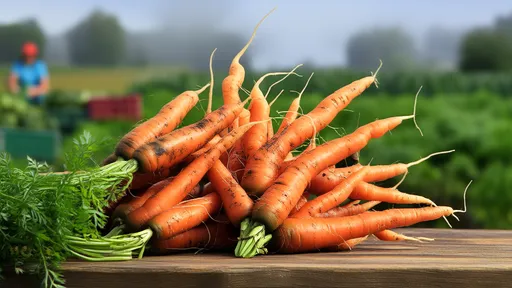
In the labyrinth of modern supermarkets, where apples gleam with waxen perfection and carrots stand in uniform orange battalions, a quiet revolution is taking root. It’s a movement centered not on the pristine and the symmetrical, but on the odd, the knobby, the scarred, and the twisted—the so-called "ugly produce." For decades, these misfits of the agricultural world have been discarded, plowed under, or left to rot, victims of stringent cosmetic standards imposed by retailers and, by extension, consumers. Yet, as awareness grows about the staggering scale of food waste and its environmental and economic toll, these imperfect fruits and vegetables are stepping into the spotlight, championed by startups, farmers, and environmentally conscious shoppers alike. This is not merely a trend; it is a necessary shift in our relationship with food, a challenge to deeply ingrained aesthetics, and a critical step toward a more sustainable and equitable food system.
The journey from farm to fork is fraught with judgment. Before a fruit or vegetable even has a chance to be weighed and priced, it must pass a rigorous visual inspection. Grocery chains and distributors have long enforced strict grading systems that prioritize appearance above all else. A cucumber must be perfectly straight; an apple must be unblemished and of a consistent color; a potato must be a specific size and shape. These standards, often more about marketability than nutrition or taste, result in an estimated 20-40% of produce never even leaving the farm. Farmers, operating on thin margins, often have no choice but to discard tons of perfectly edible food simply because it doesn’t meet an arbitrary ideal of beauty. This waste represents not just a loss of food, but a squandering of the resources—water, land, labor, and fuel—that went into growing it.
Enter the ugly produce movement. Over the past several years, a wave of innovative companies has emerged with a singular mission: to rescue this rejected food and find a market for it. Businesses like Imperfect Foods, Misfits Market, and Hungry Harvest have built their entire models around sourcing cosmetically challenged produce directly from farmers and delivering it to consumers' doors at a discounted price. Their value proposition is twofold. First, they offer affordability, providing customers with healthy food at lower prices than traditional grocery stores. Second, and perhaps more powerfully, they offer a narrative. Each box of lumpy tomatoes, two-legged carrots, or undersized oranges comes with a story—a story of redemption, of environmental stewardship, and of challenging a wasteful system. This narrative resonates deeply with a growing segment of consumers who want their purchasing decisions to align with their values.
The environmental argument for embracing ugly produce is compelling and urgent. Food waste is a monumental contributor to climate change. When food rots in landfills, it produces methane, a greenhouse gas far more potent than carbon dioxide. The resources wasted on food that is never eaten are staggering. It is estimated that globally, if food waste were a country, it would be the third-largest emitter of greenhouse gases after China and the United States. By diverting ugly produce from the waste stream, these companies and their customers are directly reducing this environmental burden. They are ensuring that the water used to grow a crooked zucchini and the energy used to transport a scarred apple are not expended in vain. This is a tangible, impactful form of climate action that sits on your dinner plate.
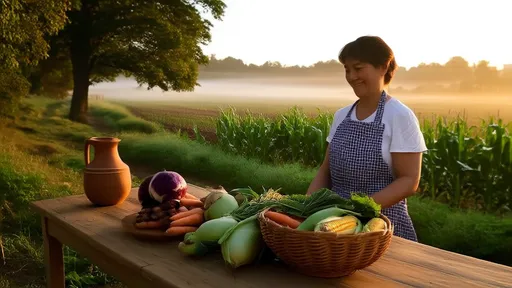
Beyond the environmental benefits, the movement also touches on issues of social equity and food access. A significant portion of the population, even in wealthy nations, struggles with food insecurity. The contradiction is stark: massive quantities of edible food are destroyed while people go hungry. Ugly produce initiatives often partner with food banks and community organizations to donate a portion of their rescued food, helping to bridge this gap. By creating a commercial value for produce that was previously considered worthless, the movement also provides farmers with an additional revenue stream for their entire harvest, not just the photogenic portion. This can be a financial lifeline, making small and mid-sized farms more viable in an increasingly consolidated agricultural landscape.
Of course, changing consumer perception is at the heart of this endeavor. For generations, advertising and marketing have equated the perfect exterior of a fruit with quality, health, and safety. We have been conditioned to believe that a blemish on the skin indicates a problem within. The ugly produce movement is tasked with undoing this conditioning, educating consumers that a crooked carrot is just as nutritious—and often just as tasty, if not more so—than its perfectly straight counterpart. The scars and odd shapes are often merely the result of natural growing conditions, such as variations in rainfall or contact with a leaf or another piece of fruit. They are not indicators of inferior quality or lack of flavor. In many cases, an heirloom tomato that cracks under the sun is far more flavorful than a perfectly round, hydroponic one bred for durability during shipping.
The future of the ugly produce movement is promising but not without its challenges. As these companies scale, they must navigate complex logistics to ensure efficiency and maintain their lower price point. There is also the danger of "mission drift," where the pursuit of profit could overshadow the original environmental and social goals. Furthermore, the ultimate success of the movement would be to render itself obsolete—to push major retailers to relax their cosmetic standards and integrate ugly produce into their regular aisles, normalizing imperfection for all shoppers. Some chains, like Walmart and Whole Foods, have already begun pilot programs to sell ugly produce, a sign that the message is getting through.
Ultimately, the rise of ugly produce is about more than just saving funny-looking fruits and vegetables. It is a profound cultural shift. It is a rejection of wasteful perfection and an embrace of authenticity and resourcefulness. It asks us to look beyond the surface, to value substance over style, and to reconsider our definition of what is beautiful. In a world facing immense pressure from climate change and resource scarcity, the choice to eat a knobby potato becomes a small but powerful act of defiance. It is a vote for a food system that is less wasteful, more inclusive, and more honest—one where nourishment triumphs over appearance, and every carrot, no matter how many legs it has, has a chance to be enjoyed.

By /Aug 29, 2025

By /Aug 29, 2025
By /Aug 29, 2025

By /Aug 29, 2025

By /Aug 29, 2025
By /Aug 29, 2025
By /Aug 29, 2025

By /Aug 29, 2025
By /Aug 29, 2025

By /Aug 29, 2025

By /Aug 29, 2025
By /Aug 29, 2025

By /Aug 29, 2025

By /Aug 29, 2025

By /Aug 29, 2025
By /Aug 29, 2025
By /Aug 29, 2025

By /Aug 29, 2025

By /Aug 29, 2025
By /Aug 29, 2025